LAB / EXPERIMENT 04
Safe Pickup
What if technology could make child pickup safer — without asking families to give up privacy?
I explored facial recognition for authorized pickup using value-sensitive design — looking beyond whether the technology could work to whether it should, for whom, and under what conditions.
RESPONSIBLE TECH · PRIVACY · SAFETY · VALUE-SENSITIVE DESIGN
THE CONCEPT
Verify the adult. Protect the child.
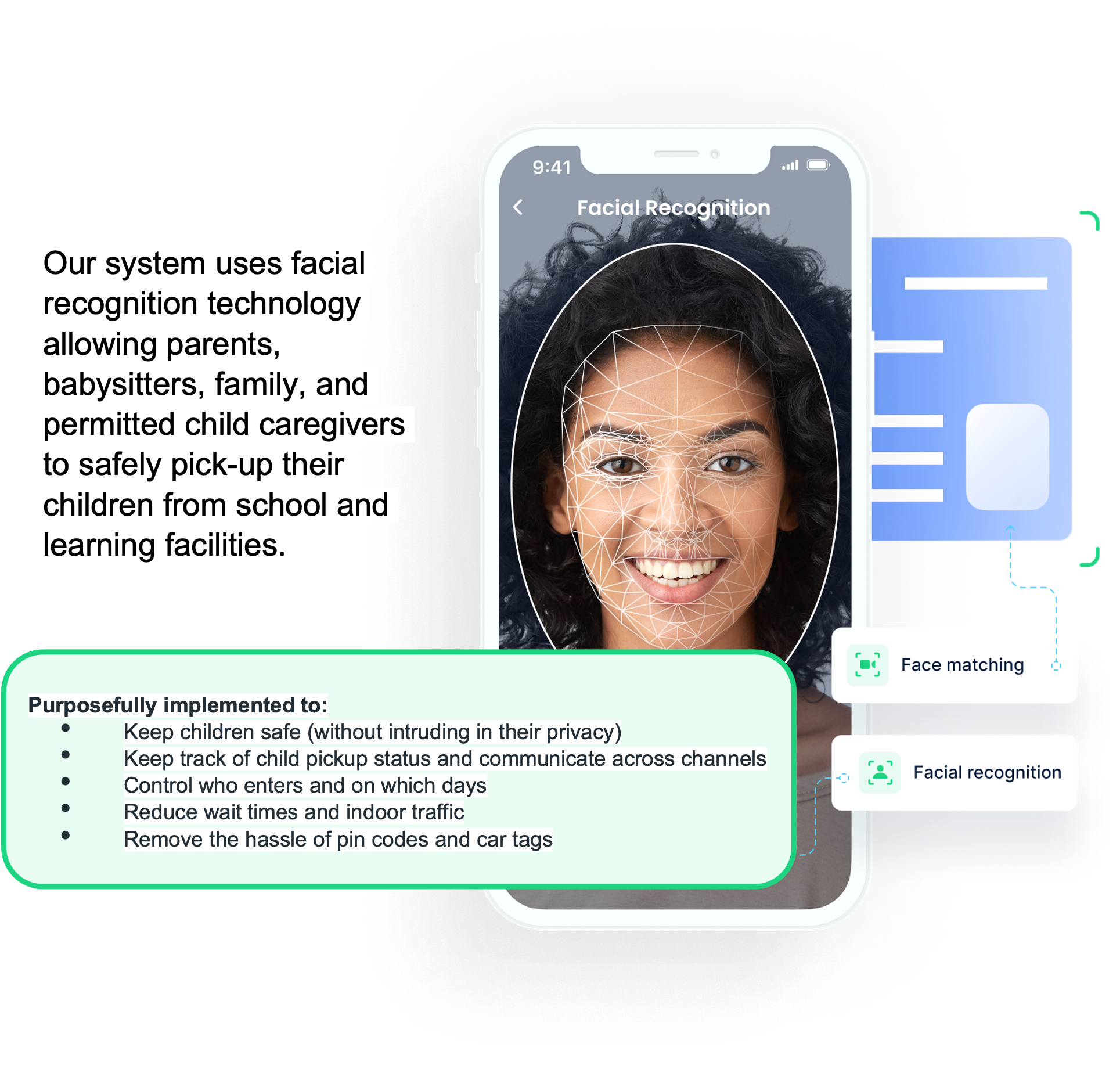
The concept used facial recognition to verify an authorized pickup person against who was permitted to collect a child at that specific time.
The child was intentionally kept outside the biometric system.
- AUTHORIZED ADULT
- VERIFY
- PERMISSION
- PICKUP
THE TENSION
Safety wasn't the only value worth protecting.
Once I looked at the system through the people affected by it, the design problem became less about recognition technology and more about balancing competing values.
- 01
PRIVACY versus SAFETY
Protect children without creating unnecessary surveillance.
- 02
EASE versus SECURITY
Make pickup simple without weakening authentication.
- 03
EFFICIENCY versus HUMAN CARE
Reduce friction without turning a human handoff into a purely technical transaction.
- 04
INNOVATION versus REGULATION
Explore what's possible while respecting consent, fairness and accountability.
- PRIVACYSAFETY
- EASESECURITY
- EFFICIENCYHUMAN CARE
- INNOVATIONREGULATION
THEN I PUSHED IT
What happens five years after you ship it?
I used speculative future headlines to imagine the product in the real world — adoption, unintended uses, privacy debates, failures and changing behavior.
The exercise forced me to design beyond the happy path and consider what this technology could become, not just what it could do today.
01
Parents Report Peace of Mind with Enhanced Child Safety Technology
02
Babysitters Rejoice: Unlocking the “Easy Button” with Facial Recognition Child Pickup
03
Granny Goes Techy: Embracing Facial Recognition for Picking Up Grandkids!
04
Teens Privacy Violation Sparks Debate Over Face Scan in Daycare App
05
Growing Concerns Surround Accuracy of Facial Recognition for Authorized Pickup at Childcare Facilities
06
Facial Recognition Outage Leaves Parents Waiting and Worried
07
Facial Recognition Mishap Causes Brief Panic in Daycare Center
08
Gone Are the Days of Forgotten Pickup: Magical Facial Recognition to the Rescue!
09
Technology Balances Privacy and Safety for Parents and Caregivers
10
Childcare Providers See Boost in Efficiency Thanks to Innovative Face Recognition
WHAT IT CHANGED
The edge cases became requirements.
Thinking through failure changed the product itself: stronger privacy protections, clearer consent and transparency, accuracy and fairness monitoring, restricted access, regulatory review and ways for families to raise concerns.
PRIVACY · CONSENT · FAIRNESS · ACCURACY · ACCESS · ACCOUNTABILITY
WHAT I LEARNED
Responsible design starts before the interface.
With sensitive technology, the job isn't only to make the happy path easier. It's to understand who could be harmed, where values conflict, and what must be true before the experience should exist at all.
CURRENTLY CURIOUS ABOUT
RESPONSIBLE AI · PRIVACY · BIOMETRICS · SAFETY · HUMAN-CENTERED AI · EMERGING TECHNOLOGY