CAPITAL ONE · 2022 · SYSTEMS / RESEARCH / LEADERSHIP/MARK OF DISTINCTION · 2022
Trade-In
Turning trade-in uncertainty into a shared understanding between shoppers and dealers before they meet.
- ROLE
- Product Design Leader
- TIMELINE
- 2022
- FOCUS
- Systems · Research · Leadership
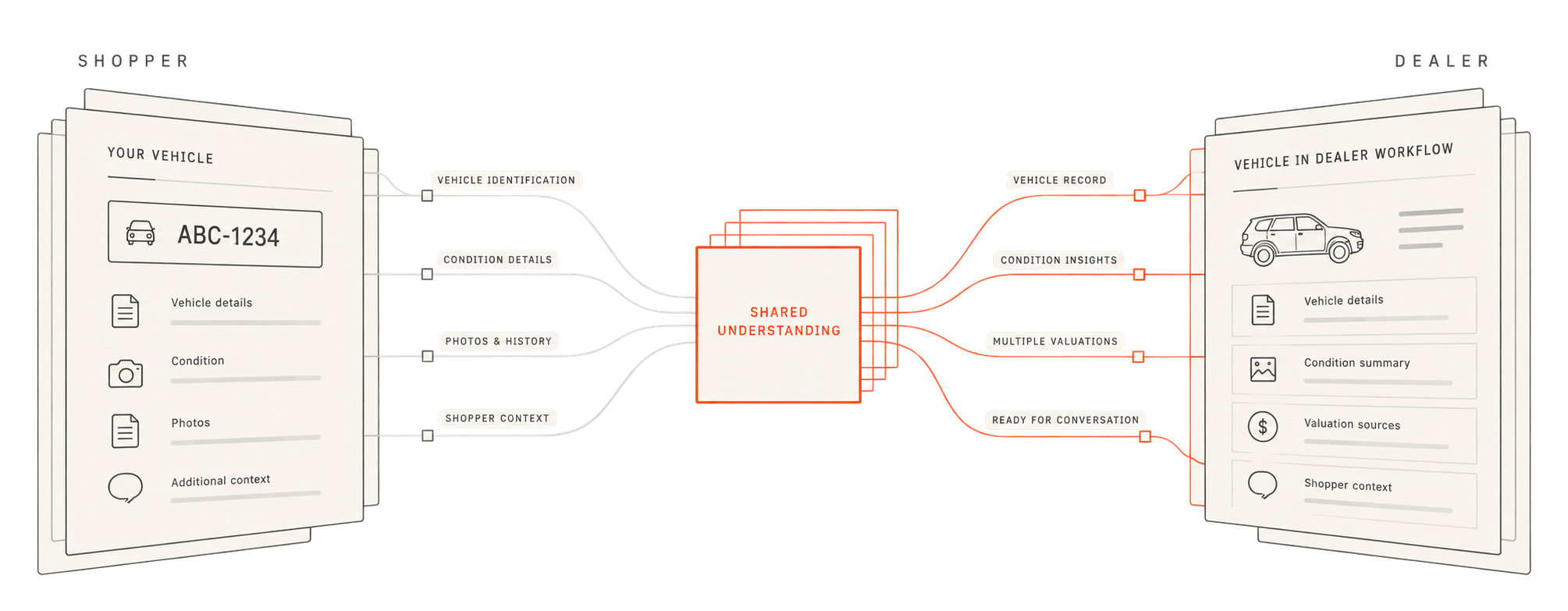
Trade-in looked like an experience problem on the surface. In practice, fixing it meant aligning shopper expectations, dealer workflows, valuation data, and the systems carrying that information between them.
The work reframed trade-in from a one-sided estimate into a shared information problem: give shoppers enough clarity to move forward confidently while giving dealers better context before the vehicle ever arrives.
01/THE PROBLEM
A trade-in could unravel an otherwise good deal.
Shoppers entered the process with one expectation of what their vehicle was worth, while dealers still needed to evaluate the actual vehicle, its condition, market value, and economics. That gap created uncertainty late in the purchase journey.
- 21%
- OF LOST DEALS TIED TO TRADE-IN UNCERTAINTY
02/MY APPROACH
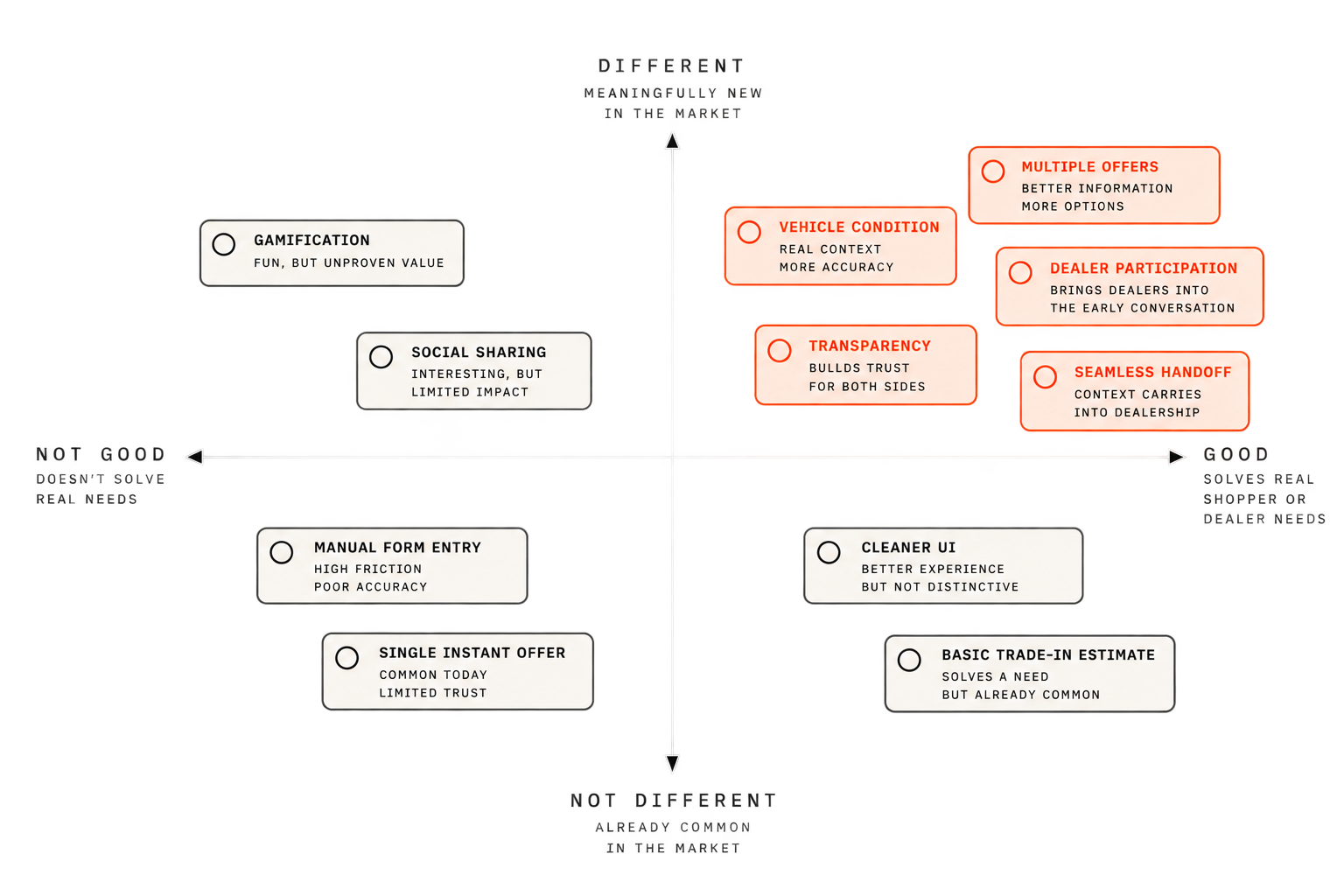
Trust improves when both sides have better information.
Rather than designing a better-looking estimate, I focused the work on improving the information exchanged between shopper and dealer — and making that information useful before the dealership visit.
- Made vehicle identification easier — license plate and vehicle lookup to reduce effort and improve accuracy
- Captured the condition that actually affects value — a straightforward way to describe the vehicle before appraisal
- Designed for multiple valuation sources — no single generic estimate treated as the final answer
- Brought the dealer into the process — supporting dealer valuation and bidding rather than leaving it consumer-side
- Carried the information into dealer workflows — the context reaching the dealership systems where the deal continued
03/THE SOLUTION
Trade-in became a shared process instead of a last-minute negotiation.
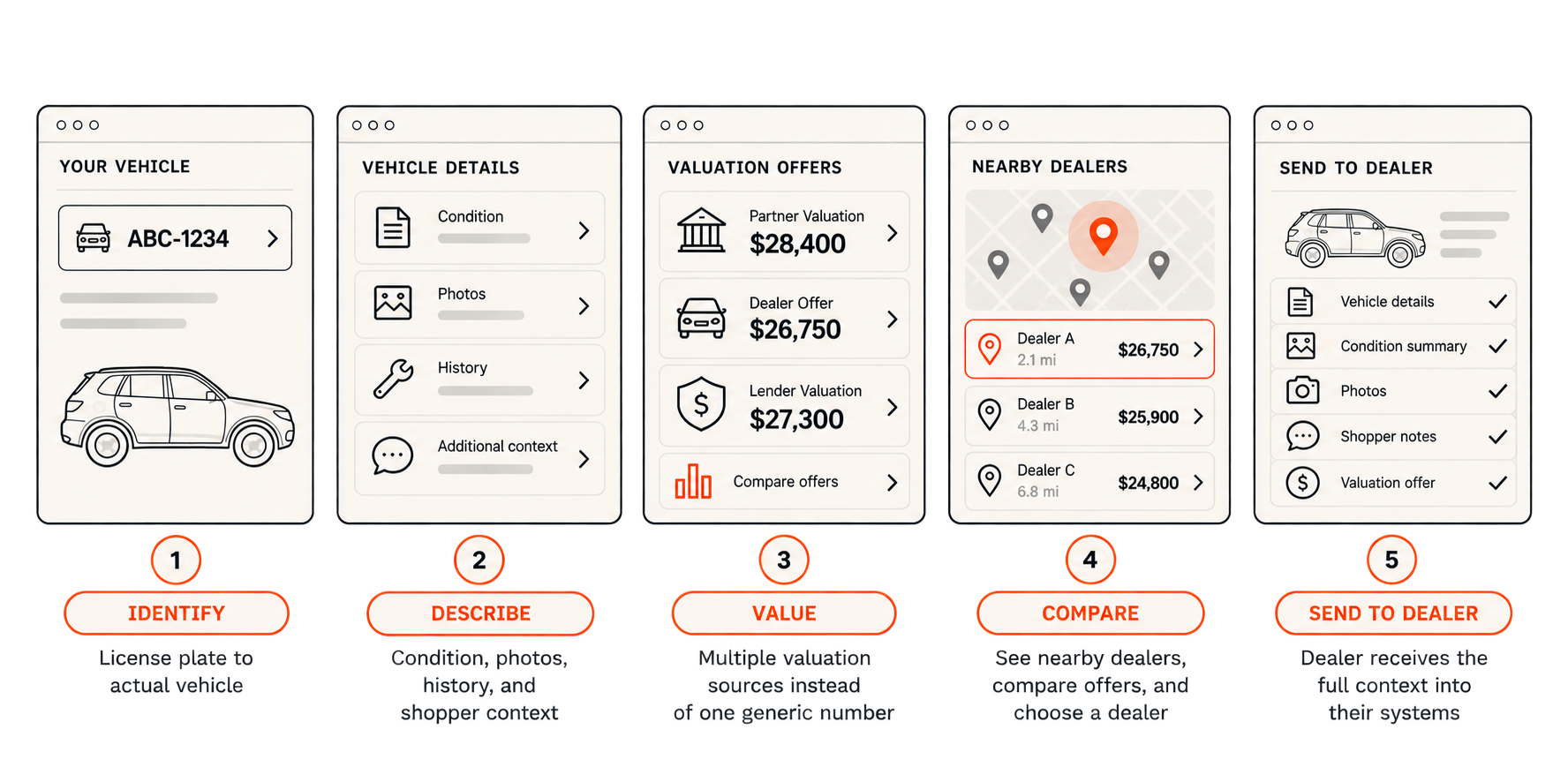
The resulting experience connected shopper-entered vehicle information, condition, valuation, and dealer input so both sides could enter the dealership conversation with better context.
- License-plate identification to start from the actual vehicle
- Vehicle-condition capture in the shopper’s own words
- Multiple valuation providers instead of one generic number
- Dealer bidding and input, bringing the dealer into the estimate
- Integration into dealer systems so the context carried forward
04/IMPACT
Better information moved the trade-in conversation closer to agreement before the customer arrived.
The experience aimed to improve confidence on both sides of the transaction: shoppers understood what shaped their trade-in value, while dealers received better information before the in-person appraisal.
- 95%
- COMPLETION TARGET
- Reduced
- VALUATION VARIANCE
- Improved
- LEAD QUALITY
REFLECTION
The work changed how I think about trust in product design.
Trust breaks when two people think they're agreeing to different things.
Better decisions came from improving what both sides knew — not simply making the estimate look more precise.
The interface mattered, but the real work was carrying useful context into the dealer workflow.